Save the Cat Beat Sheet for Dystopian Romantasy

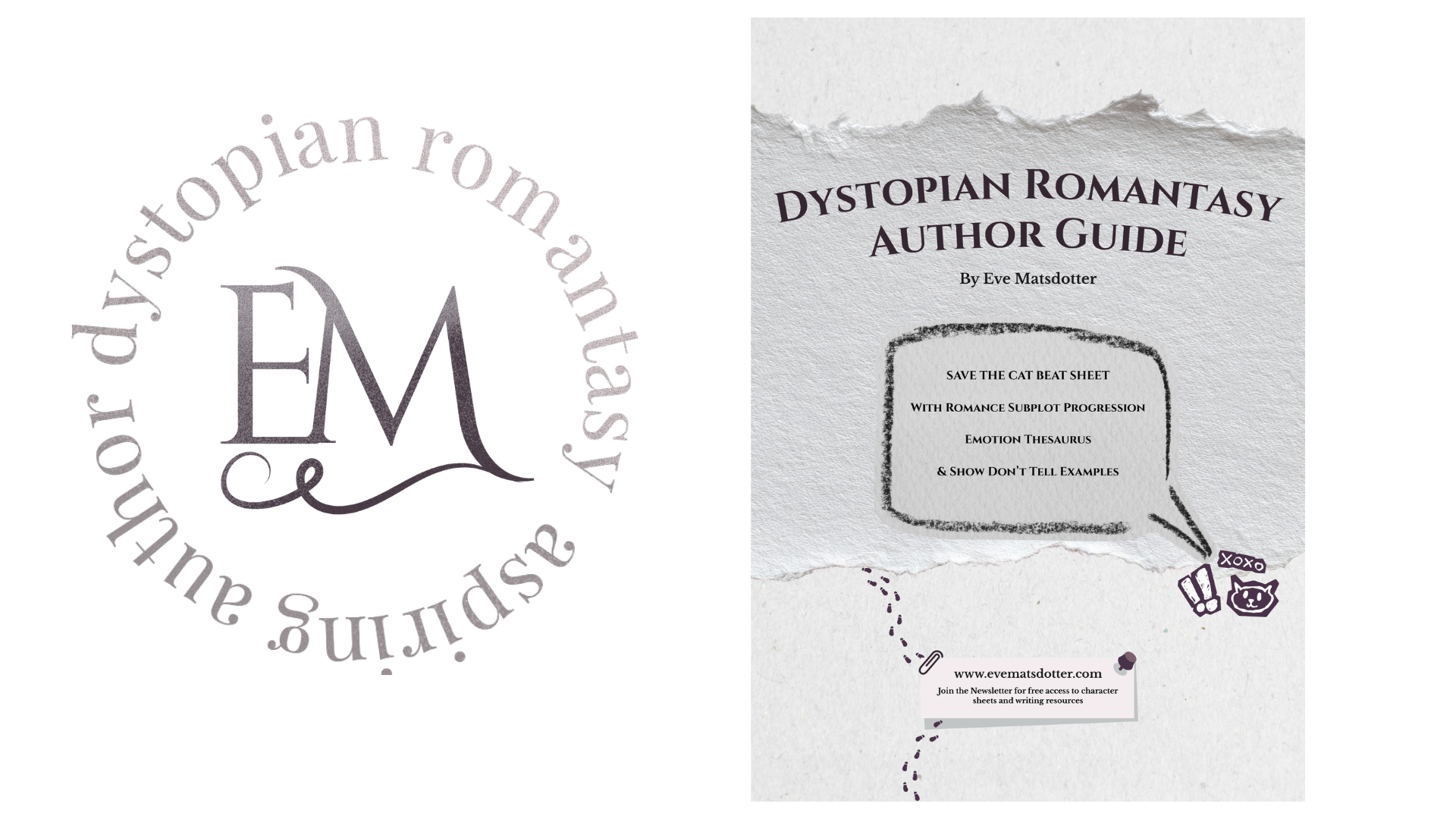
This is a guide to structuring a dystopian romantasy novel with Blake Snyder's Save The Cat beat sheet. This guide has been specifically adapted to help you weave together two critical narrative threads: your high-stakes dystopian plot and your romance subplot.
What is the Save The Cat Beat Sheet? 🐈
The Save The Cat beat sheet is a 15-beat story structure developed by screenwriter Blake Snyder. It is a framework for pacing a story so the emotional beats land. Each beat occurs at a specific percentage of your story, ensuring your novel flows naturally from setup through conflict to resolution.
What's Included in This Guide?
For each of the 15 beats, you'll find:
Percentage: Where this beat should occur in your manuscript
Core Description: What this beat accomplishes in your story
Dystopian Storytelling Tips: Specific guidance for your world-building and plot
Romance Progression: Where your love story should be at this point
Emotion Thesaurus: Lists of emotions appropriate for each character at this beat
Show Don't Tell Examples: Side-by-side comparisons of telling vs. showing
Concrete Examples: Full scenarios demonstrating the concepts in action
The 15 Save the Cat beats at a glance
Opening Image (0-1%): a snapshot of the protagonist's flawed life before the story begins.
Theme Stated (5%): someone other than the protagonist hints at what the story is really about.
Set-Up (1-10%): the status quo, with their world, the people around them and what is missing.
Catalyst (10%): an event breaks the status quo, and life as they know it is over.
Debate (10-20%): the protagonist hesitates, doubts and weighs the choice before committing.
Break Into Two (20%): they choose a new goal and step into the upside-down world of Act Two.
B Story (22%): a new relationship arrives that will teach them the theme, and often the love story starts here.
Fun and Games (22-50%): the promise of the premise, as the protagonist explores the new world.
Midpoint (50%): a false victory or a false defeat that raises the stakes and starts the clocks ticking.
Bad Guys Close In (50-75%): pressure mounts from outside and inside, and the team starts to crack.
All Is Lost (75%): the lowest point, where something or someone important is lost.
Dark Night of the Soul (75-80%): the protagonist sits with the loss and sees what they have been doing wrong.
Break Into Three (80%): everything they have learned comes together into a plan.
Finale (80-99%): they carry out the plan, prove they have changed, and the love story and the main plot merge.
Final Image (99-100%): the mirror of the Opening Image, showing how far they have come.
The Dystopian Romantasy Author Guide ⬇
DISCLAIMER: All content, previews, and work-in-progress materials shared here are the exclusive intellectual property of Eve Matsdotter. Unauthorized use, reproduction, or distribution without explicit written permission is prohibited by law and may result in legal action. We appreciate your respect for creative ownership.
Read Chapter One free. Then one email every couple of weeks.
Go To Newsletter
You will also be able to download this guide from the Toolbox I'm building. Follow me on TikTok to get updated on everything new on my website & WIP:
Until then - please enjoy this preview of the full 'Dystopian Romantasy Author Guide' based on the 'Save The Cat' beat sheet by Blake Snyder.
Check out the 'Save the Cat! Writes a Novel' written by Jessica Brody on Goodreads:
The Margins
Join the conversation
No notes in the margins yet. Be the first to leave one.
Keep reading
Related entries
 Romance Craft
How to Master Romance as a Subplot in Fantasy Novels
How to give your fantasy novel a romance subplot that deepens the story without taking over the main quest.
 Writing
How to Plot a Dystopian Romantasy Novel for Writers Who Hate Plotting
A gentle way to plot a dystopian romantasy: start with your characters, layer in the world, then find the scenes that matter.
 Writing
Crafting Fantasy: A Step-by-Step Guide for 2026 Writers
A step-by-step guide to writing fantasy, from reading the genre to building your world, your characters and your draft.